AI-Supported Risk Assessment: When Traditional FMEA Fails to See the Bigger Picture
When Traditional FMEA Fails to See the Bigger Picture
In traditional FMEA practice, risk prioritization is most often based on static ratings of severity, occurrence, and detection. While methodologically sound, this approach frequently overlooks financial impact, time-related consequences, and the strategic importance of risks, as these aspects are typically considered outside the formal scope of FMEA analysis.
As a result, risks may be ranked in a technically correct manner, but not always in alignment with real business priorities.
Evolutionary AI Algorithms and Predictive Models
The application of evolutionary AI algorithms and predictive models is transforming how risks are identified, evaluated, and prioritized. Instead of relying solely on team experience and historical data, the system continuously analyzes patterns from production processes, previous projects, and current performance indicators.
In this way, risk priority is determined based on probable future impact, not only on past events.
This approach enables:
- dynamic risk ranking in line with process changes,
- earlier identification of critical points,
- decision-making driven by prediction rather than reaction.
Financial, Time, and Strategic Aspects in Focus
Although financial, time-related, and strategic aspects are traditionally outside the formal FMEA framework, within the FMEA EXCELLENCE platform they are integrated through the use of artificial intelligence.
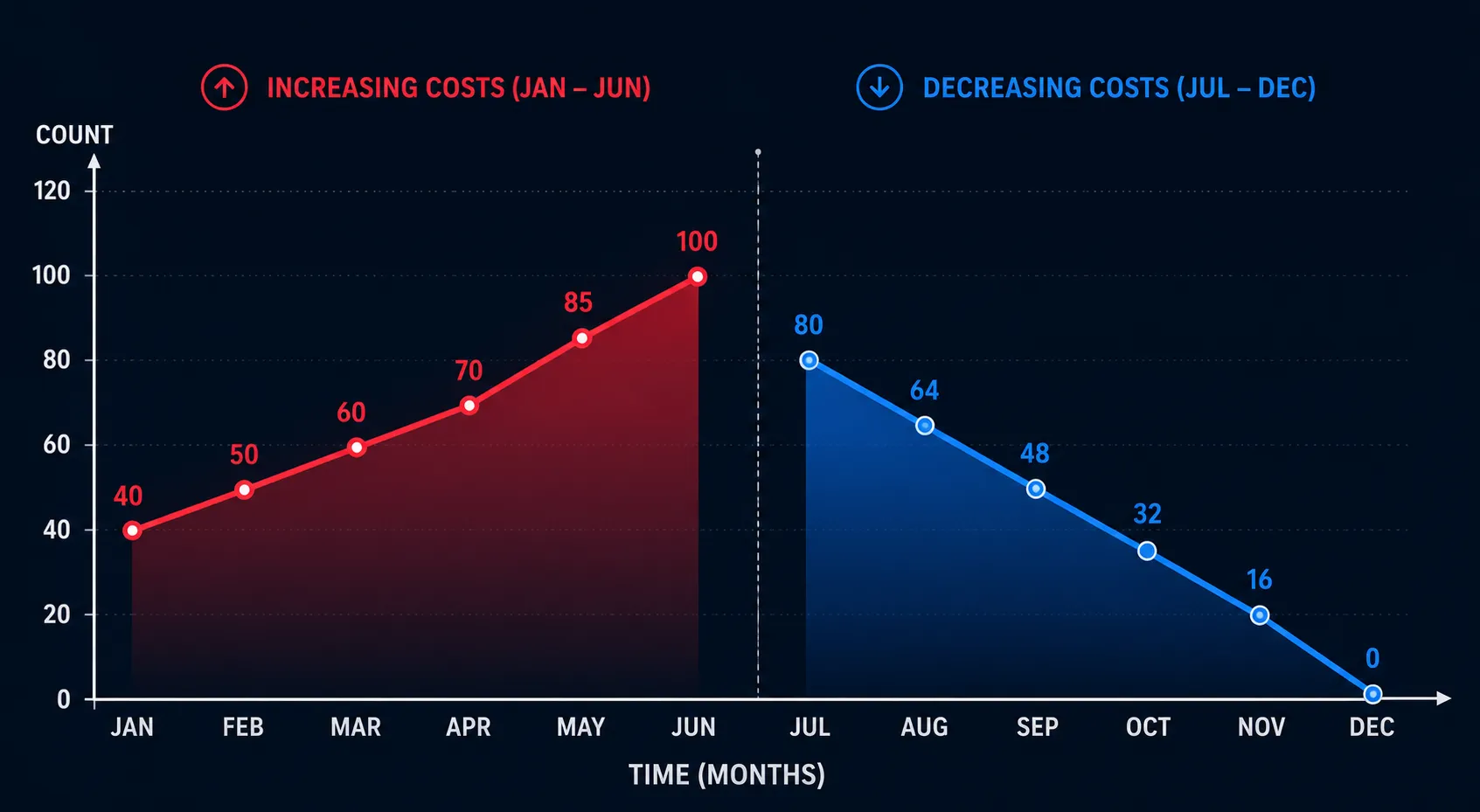
The system evaluates how individual risks may affect cost of failures, delivery timelines, and long-term organizational objectives, creating a more realistic and comprehensive view of their true significance.
From Technical Analysis to Business Decision
Automated risk prioritization allows organizations to focus resources where their impact is greatest. In this way, FMEA moves beyond being an isolated quality tool and becomes a support for strategic decision-making, directly linking technical risks with tangible business consequences.
In an environment where speed of response and decision accuracy are critical success factors, this approach represents a logical step forward in the evolution of FMEA systems.